
CPR Part 35 · Claimant, Defendant and Single Joint Expert · England and Wales (Scotland and overseas by arrangement)
Accommodation expert witness reports for personal injury and clinical negligence claims
Independent and well researched so the evidence holds up under cross-examination.
We assess what an injured person's home needs to be, and what it will cost to buy, adapt, run and maintain. Our reports cover spinal cord injury, brain injury, cerebral palsy, amputation and clinical negligence claims. Every cost is itemised and evidenced, every space requirement is drawn to scale, and every opinion is written for the Court.
Urgent instruction or court deadline? . Call Ben Burton - 07870639486
Clear. Honest. Credible.
| SCHEDULES BUILT FOR COUNSEL
We cost the future property and the 'but for' property to the same rates, dates and assumptions, so the comparison under Roberts v Johnstone and Swift v Carpenter is clean and easy to test. Running and maintenance costs are itemised, not estimated as a lump sum.| EVERY ITEM PRICED AND SOURCED
Each cost links to a documented need in the medical, care or OT evidence, and to a dated, named source: tender prices, BCIS indices, supplier quotes. If an item isn't needed, it isn't in the report. If an assumption is made, it is stated.| WE SHOW THE SPACE, NOT JUST DESCRIBE IT
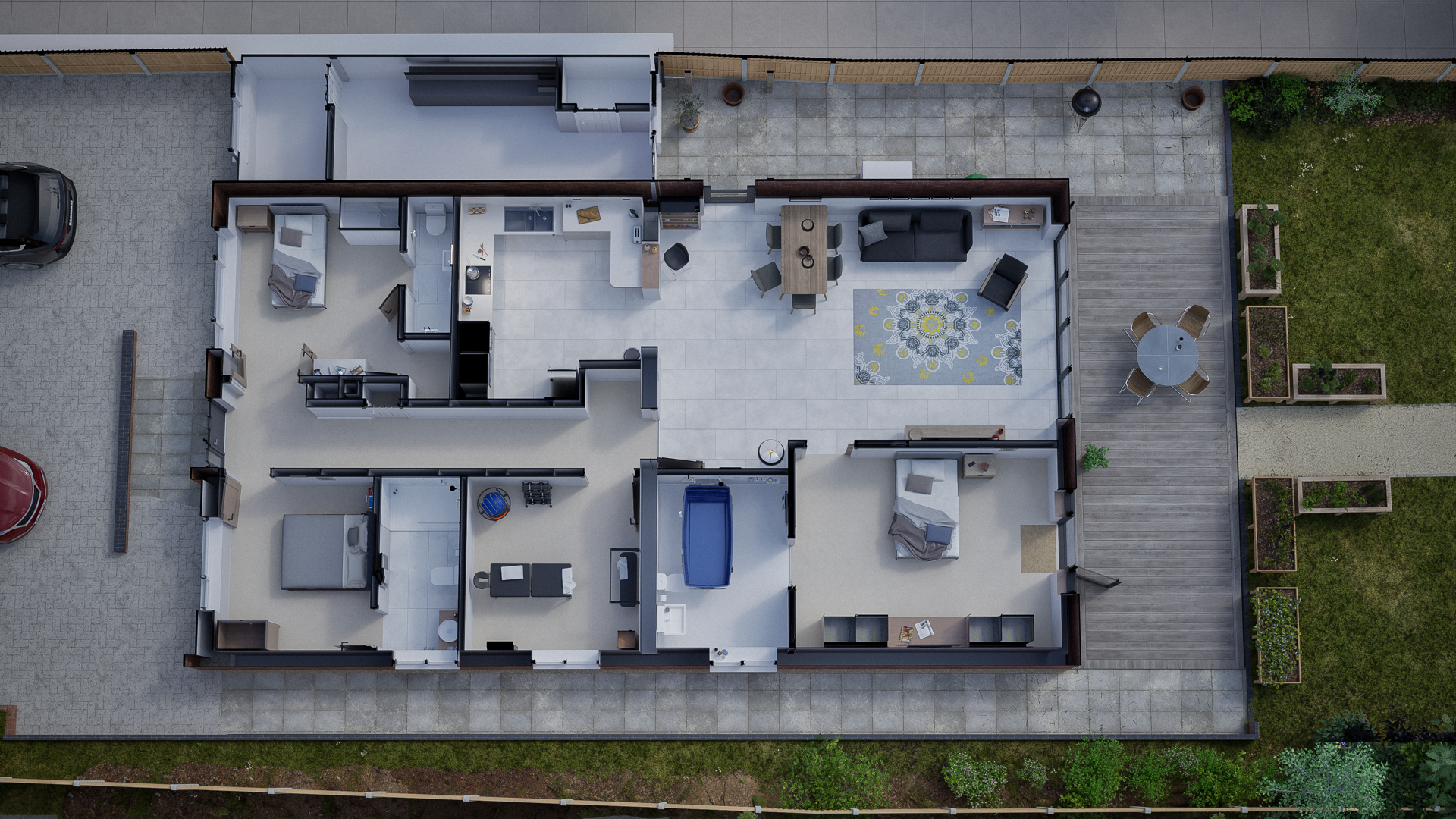
Disputed turning circles, transfer space, hoist tracks and therapy rooms are shown in 2D plans and 3D images when necessary. A judge who can see a turning circle doesn't have to imagine one. We are able to support our expert opinion with clear and easy to follow explanations.
Experience you can rely on
55+ Years of Combined Surveying Experience.
Preparing medico-legal and clinical negligence reports since 2015.
Inspection to report in 4-6 weeks or sooner for urgent cases.
How our report process works
Seven steps from first enquiry to trial, with an update from us at each one.
Enquiry. Send party names and the property address through the form, or call us.
Conflict and fee check (1 working day). We confirm there is no conflict, our availability and a written fee estimate.
Letter of instruction. You send instructions with the medical, care and OT reports, property details and pleadings.
Site inspection. We visit the current home (and any proposed property), meet the claimant and family where appropriate, and measure.
Report (typically 4–6 weeks from inspection). A signed CPR Part 35 report with cost schedules, scaled plans and 2D/3D visuals.
Part 35 questions (typically 7–14 days). We answer written questions from either side.
Joint statement and trial. We meet the other side's expert, agree what we can, and attend court if needed.
Urgent? Tell us your deadline at step 1 and we'll say honestly whether we can meet it.
Case Types
| SPINAL CORD INJURIES (SCI)
Paraplegia and tetraplegia adaptations that might require increased circulation, environmental control systems, level-access, and specialised therapy/hydrotherapy spaces.
| CLINICAL NEGLIGENCE
Clinical negligence settlements frequently fund bespoke home adaptations to restore independence for the individual and accommodate seamless specialist medical equipment.
| CEREBRAL PALSY/PAEDIATRIC CLAIMS
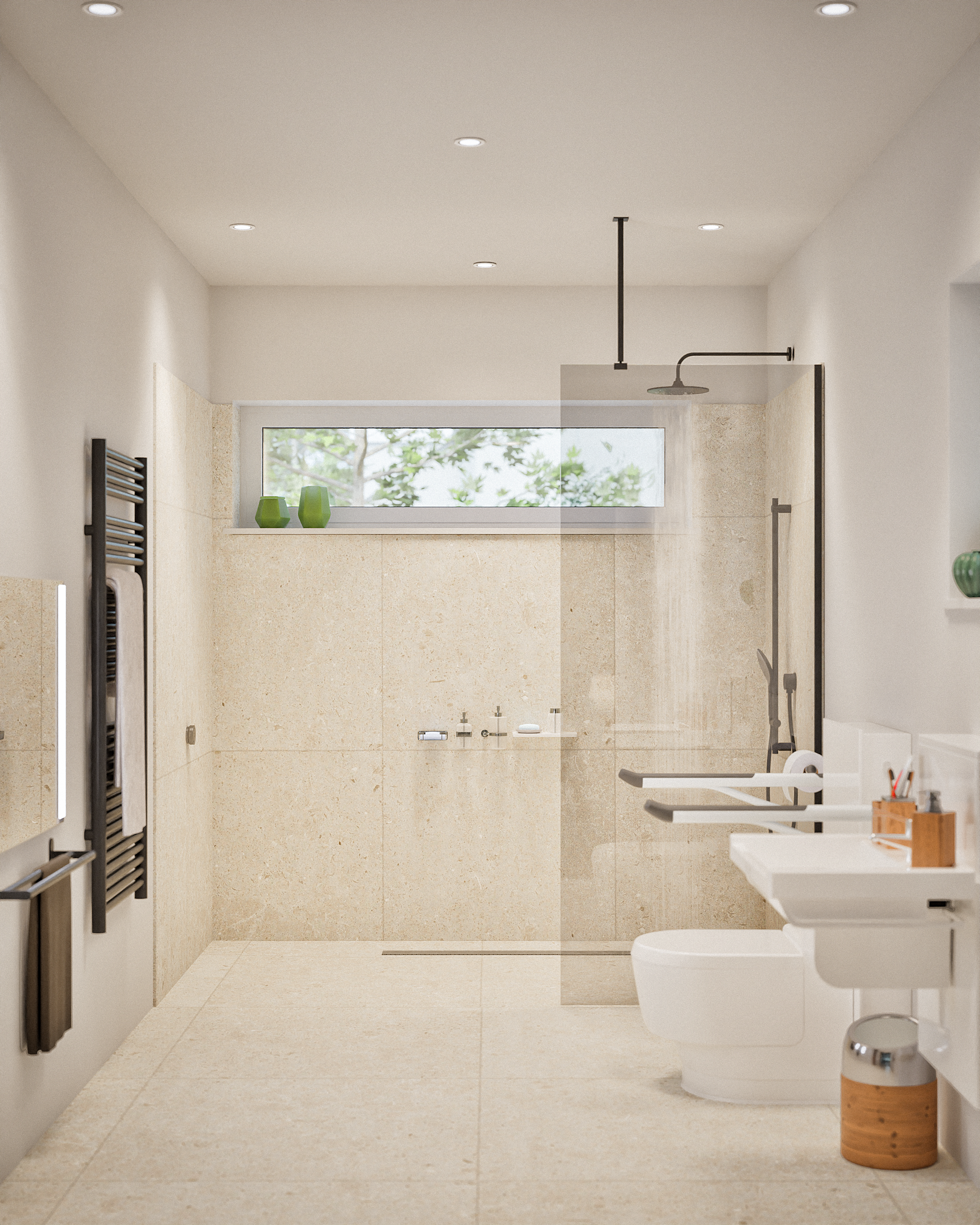
Paediatric and cerebral palsy claims often fund home modifications such as wheelchair ramps, widened doorways, and specialised wet rooms to meet changing needs.
| TRAUMATIC BRAIN INJURY (TBI)
Low-stimulus environments, acoustic management, safety zoning, and dedicated carer accommodation suites. Homes designed for safety and comfort.
| AMPUTEE AND COMPLEX ORTHOPAEDIC
Home adaptations for amputees and complex orthopaedic needs prioritise seamless transitions, incorporating widened doorways and flush thresholds.
| SENSORY IMPAIRMENTS
Home adaptations for sensory impaired clients ensure safe, accessible, and intuitive home designs and equipment that preserve independence and dignity.
What is included in every accommodation report?


| COMPREHENSIVE PROPERTY AUDIT |
Detailed spatial evaluation of the current home, biomechanical assessment of equipment used (powerchairs, manual chairs, standing frames, hoists).
| NEEDS vs. PROPERTY EVALUATION |
Thorough assessment of whether the existing accommodation can be adapted or if relocation is the only reasonable outcome.
| ARCHITECTURAL CONCEPT PLANS |
Scaled layout drawings illustrating functional access routes, transfer spaces, through-floor vertical lift shafts, and specialised wet room facilities.
| MARKET TESTED COST SCHEDULE |
Fully itemised, elemental costings reflecting current construction tender pricing, building regulation compliance (Part M1/M2), and professional fees.
| INCIDENTAL AND RUNNING COSTS |
Realistic projections for maintenance contracts (lifts, hoists, automatic doors), specialised utilities, insurance differentials, and cyclical redecoration/maintenance.
Our Experts
Both experts report to the same standard and method. We'll recommend the better fit for your case, or you can name your preferred expert.

Nigel Burton
MCIOB · MAPM · MAPS · MCMI · Partner, Idapt DesignNigel is a building surveyor who specialises in designing accessible environments and project-managing adaptations for people with disabilities and catastrophic injuries.
He began his career in the NHS estates service, managing capital programmes and hospital refurbishments. In 1985 he founded the practice that is now Idapt Design, working for private clients, local authorities, insurers and law firms.
Today his work centres on the design and delivery of complex home adaptations following clinical negligence, personal injury and accidents. That hands-on experience of what adaptations really cost to design, build, run and maintain underpins every report he writes. He has also lectured on accessible design in the UK and the USA.

Ben Burton
PgDip Surveying · LLB Law · Partner, Idapt DesignBen is a surveyor with more than 15 years' hands-on experience designing and project managing complex residential adaptations for people with catastrophic injuries and other accessibility needs. His detailed knowledge of specialist adaptation products puts him in a strong position to assess, critique and cost proposed adaptations, and to explain clearly what a claimant's home needs and why.
Before joining Idapt Design, Ben trained and practised as a solicitor. He understands the litigation process, CPR compliance and why expert evidence must be robust and defensible, and he combines that legal discipline with practical design insight to give the court objective, credible evidence on accommodation needs and quantum.
FAQs FOR SOLICITORS
-
Once formal instructions, the complete medical/OT bundle, and property access details are received, our standard turnaround is 4 to 6 weeks from the date of the physical site inspection. If you face an impending court disclosure deadline, please notify us prior to instruction - fast-track or urgent reports can often be accommodated subject to diary availability.
-
We accept instructions from Claimant solicitors, Defendant insurers/legal teams, and as Single Joint Experts. Our duty remains strictly overriding to the court to provide independent, objective, and CPR Part 35–compliant evidence regardless of the instructing party.
-
We work on a transparent hourly rate structure for document review, site inspections, report drafting, joint discussions, and court attendance. Depending on the complexity and geographic location of the claimant, we can provide a fixed-fee quotation or a strict fee cap upon reviewing the Letter of Instruction (LOI). Site inspection travel is charged at a reduced hourly rate plus direct disbursements, and our cancellation terms for inspections or trial attendance are set out clearly in our standard Terms of Business.
-
To ensure our assessment is proportionate and accurate, we typically require:
The formal Letter of Instruction (LOI) confirming the scope and key issues in dispute.
Relevant medical reports (e.g., neurology, spinal, orthopaedic) confirming prognosis and life expectancy.
Care and Occupational Therapy (OT) expert reports (identifying current and lifetime equipment needs).
Existing property details (address, floorplans, tenure/freehold status).
Relevant pleadings (Particulars of Claim / Defence, Schedule of Loss).
-
Yes. Our reports always address feasibility in a phased hierarchy:
Can the existing home be extended, structurally reconfigured, or adapted to meet the claimant’s lifetime needs?
If adaptation is unviable due to structural, planning, topology, or spatial constraints, we clearly document why relocation is essential.
For relocation cases, we define the search criteria, required square meterage, property type (e.g., bungalow vs. lateral ground floor), and geographic price differential.
-
We provide clear, itemized distinctions between:
Standard housing costs (the baseline value/cost the claimant would have reasonably incurred uninjured).
Additional capital cost directly attributable to the injury (extra space for carers, therapy, storage, and circulation).
Adaptation & fit-out costs (lifts, wetrooms, hoists, specialist heating/ventilation, automated access).
Annual ongoing costs (maintenance contracts for lifts/hoists, specialist insurance differentials, increased utility consumption, and cyclical redecoration).
-
Yes. We do not use speculative broad-brush estimates. All costings are based on current, itemised regional construction indices (e.g., BCIS) and real contractor tender data. Furthermore, where spatial requirements are in dispute, our reports include scaled concept layout plans and 3D spatial diagrams to clearly illustrate turning circles, hoist paths, and carer transfer zones.
-
We prioritize compliance with court timetables:
Written Part 35 questions: Typically answered within 7-14 days of receipt.
Joint Discussions & Statements: Scheduled promptly with the opposing expert to narrow issues efficiently and avoid last-minute trial listing pressure.
Trial Attendance: Our lead expert maintains up-to-date trial diary availability, provided sufficient advance notice is given to reserve court dates.
Conflict and Availability Check
Submit your details below and we will send you our "Instructing an Accommodation Expert" guide within five minutes; the guide explains the full process, typical report turnaround times, includes a copy of the expert’s CV, and provides example fee estimates.